This week we are covering the new collection from Nigerian based brand Melira , along with delving into some of the most common superstitions in our community and where they came from.
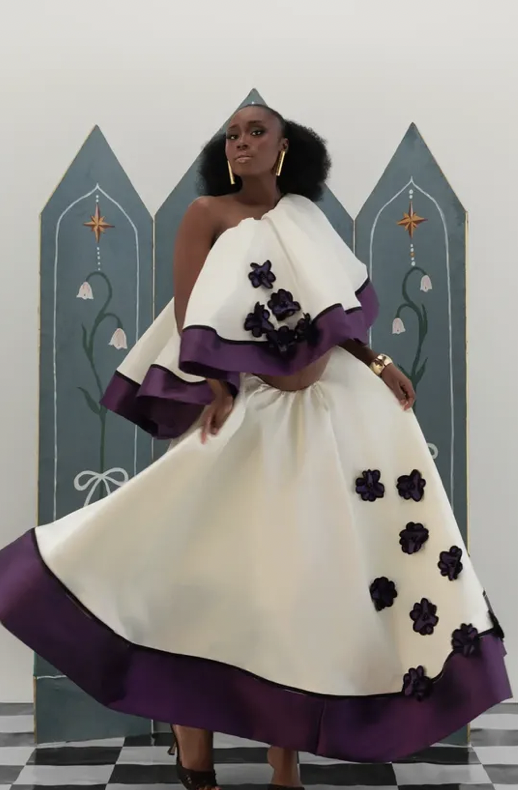











Nigerian born Brand Melira created by Nigerian designer Opemipo Ikuemonisan invited us inside the fairy tale world of Melira with their latest collection, Phantasia : Act II. The brand is built on the idea of imagination and childlike whimsy and we see that here in the collection.
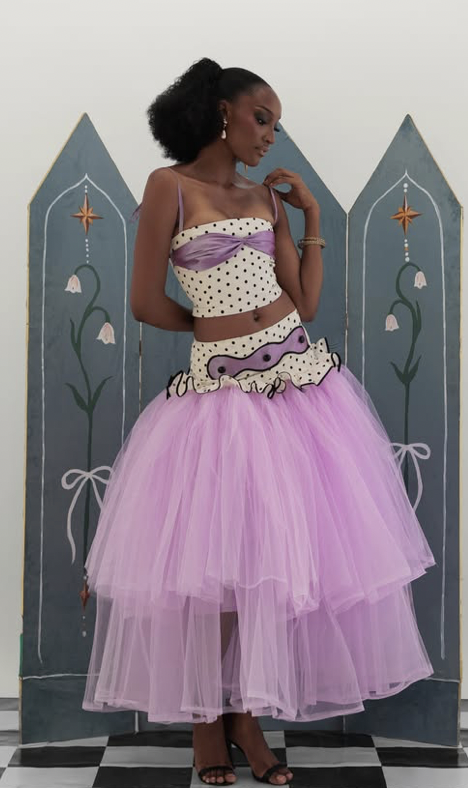
Look 3: “Lily”
Our favorite piece Look 3: “Lily” is this two piece somewhat bustier top with a matching tool skirt. Polka dots were a trend that completely took over socials since summer. We saw women really leaning into the retro vibe that polka dots bring, and nothing beats the classic black and white. Paired with this orchid fuchsia color their outfit suddenly has personality. Using the tool material for the skirt brings in that fairy princess feeling while the proportion on the top keeps it mature and sexy.
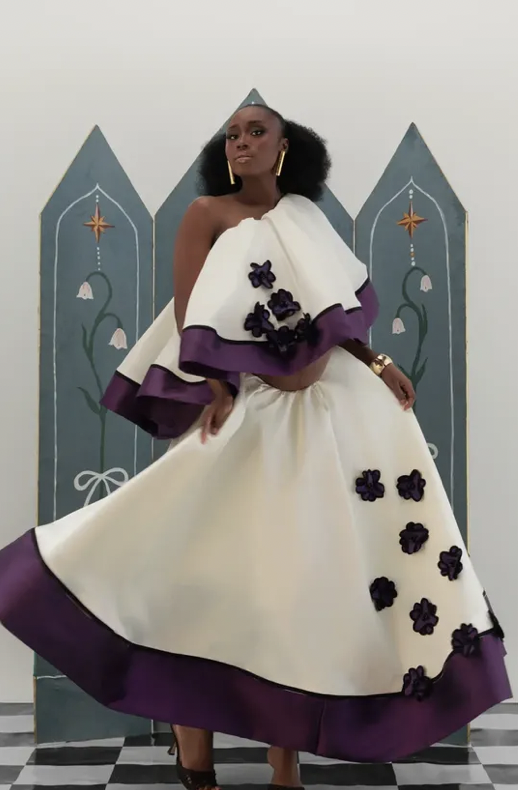
Look 1 : Violette
We are obsessed with colorful designs for every season and luckily it's warmer in Nigeria right now than it is on the East Coast. But if you are looking for something that fits the season to add to your wardrobe from this collection, Look 1 : Violette this two piece one shoulder poncho top with the matching volume maxi skirt (Picture Left) for evening winter outings.
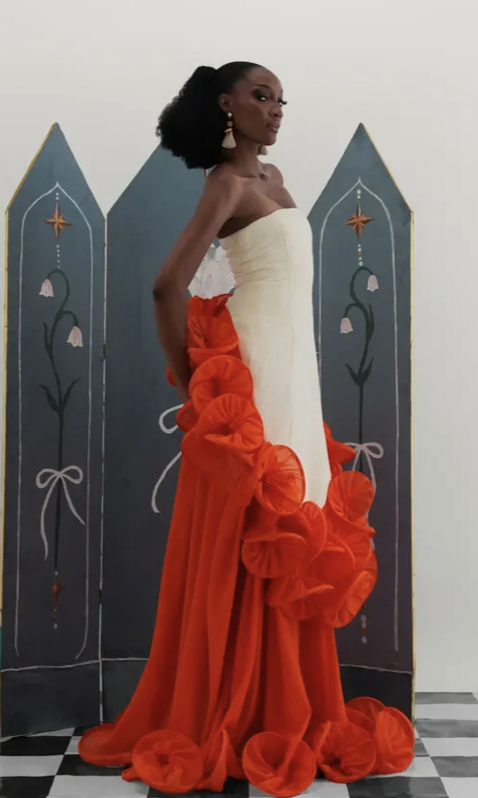
Or Look 8: Clementine a strapless, evening gown featuring an exaggerated floral-inspired draped train and dimensional rose like embellishments.
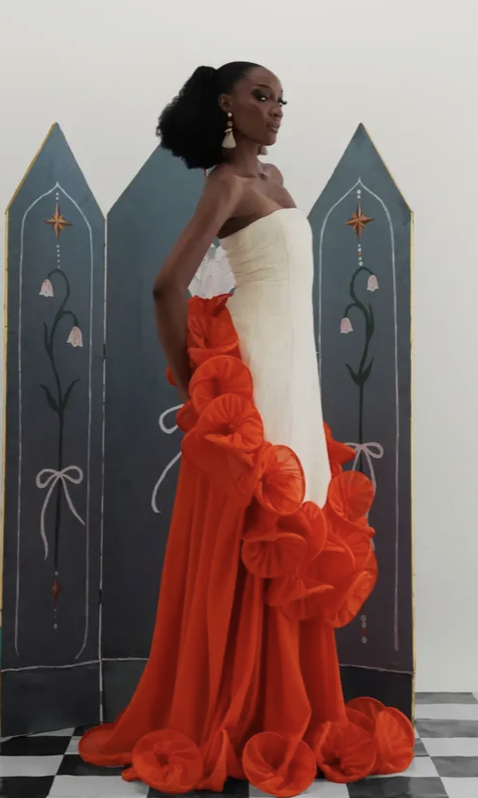
Look 8 : Clementine
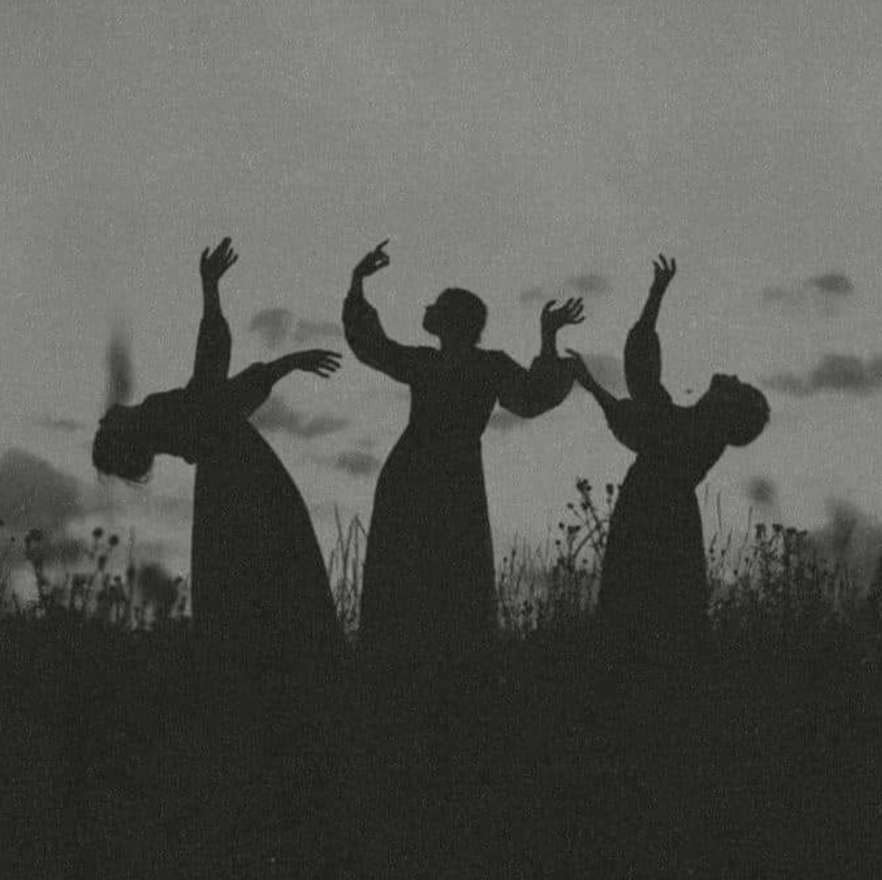
Growing up Black you learn so many superstitions, but where did they come from?
Lets go back into our history, together.
“Very superstitious…..Writings on the wall.”
The turmoil and brutality of chattel slavery saw families torn apart by violence, sickness—death in every form—as slave owners subjected an entire race of humans to live and work like animals.
In the face of this, African-American communities developed and clung to superstitions. These religious and ancestral beliefs afforded people a measure of control over their lives where they would otherwise have none. Within communities in the African American South, it is believed that sweeping over someone’s feet will prevent them from getting married. This superstition finds its origin in West African spiritual practice, where the physical body is deeply connected to one’s spiritual fate. As the feet are associated with not only physical but spiritual grounding, sweeping someone’s feet disrupts their life path, preventing marriage, inviting bad luck, and in some places, damning on to incarceration. The spell is broken after the person spits on the broom.
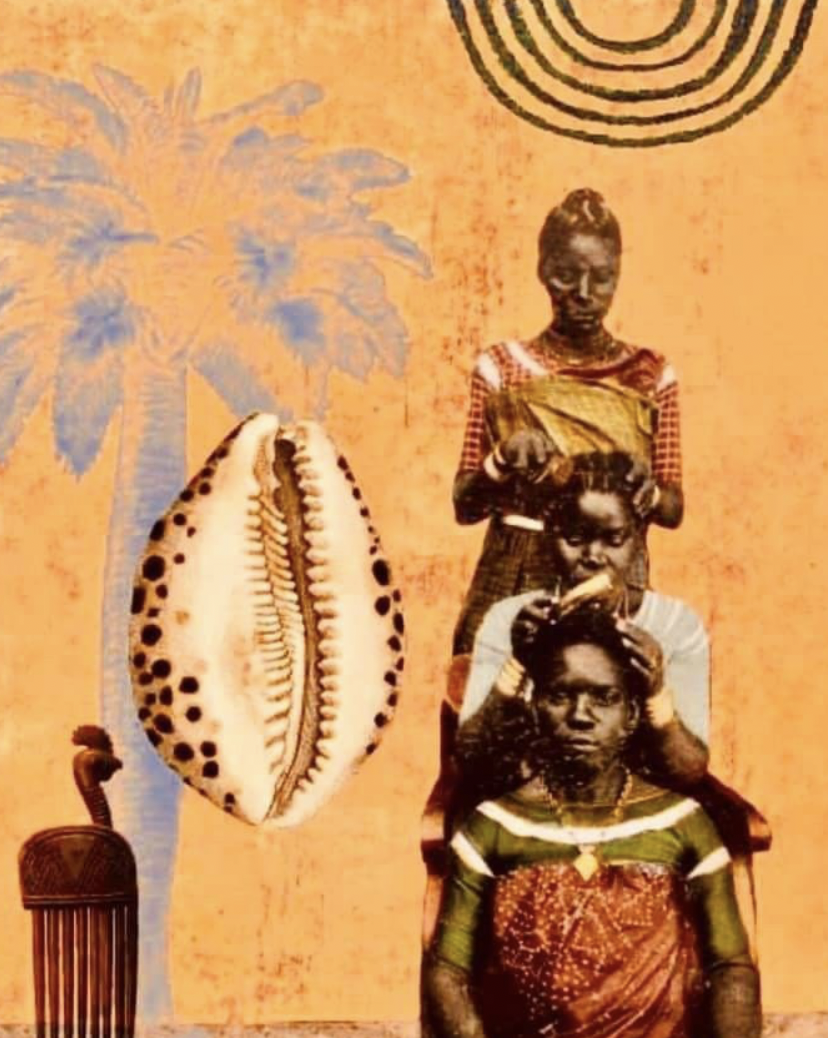
Another belief springing from West African or Celtic tradition circles around palms, itching, and the circulation of money. It is believed that if your left hand is itching, money will be entering your life, whereas if your right hand is itching, money will soon be leaving it. Incorporating West African spirituality to this, hands have an obvious correlation to finance: handling currency, handshakes with business dealings, the ability to do labor and be compensated. Exactly what one is to do with the itchy hand differs among places that believe the superstition. To scratch or not to scratch? On this question, communities are split. Some say that the itch is to be left alone if you want to ensure that its omen comes to pass. While others say that scratching the palm on wood will cash in on the potential sum or the assured impending loss.
Unsurprisingly, for African Americans moving their way out of slavery into an economy determined to keep them underfoot, itchy palms were not the sole way to predict money troubles. For purse-carrying people, it is believed that setting your purse on the floor will bring bad luck and financial loss. This superstition comes from Chinese tradition to Mexican ideas, and is echoed in the saying, “Purse on the floor is money out the door.” According to English folklore money is thought to “leak away” if it comes in contact with the floor. The purse being a natural representation of finances, this is a possible origin of the tradition. Whether the idea came about due to hygienic concerns, cultural views, or the possibility of theft, the superstition is alive and well, particularly in the African American South.
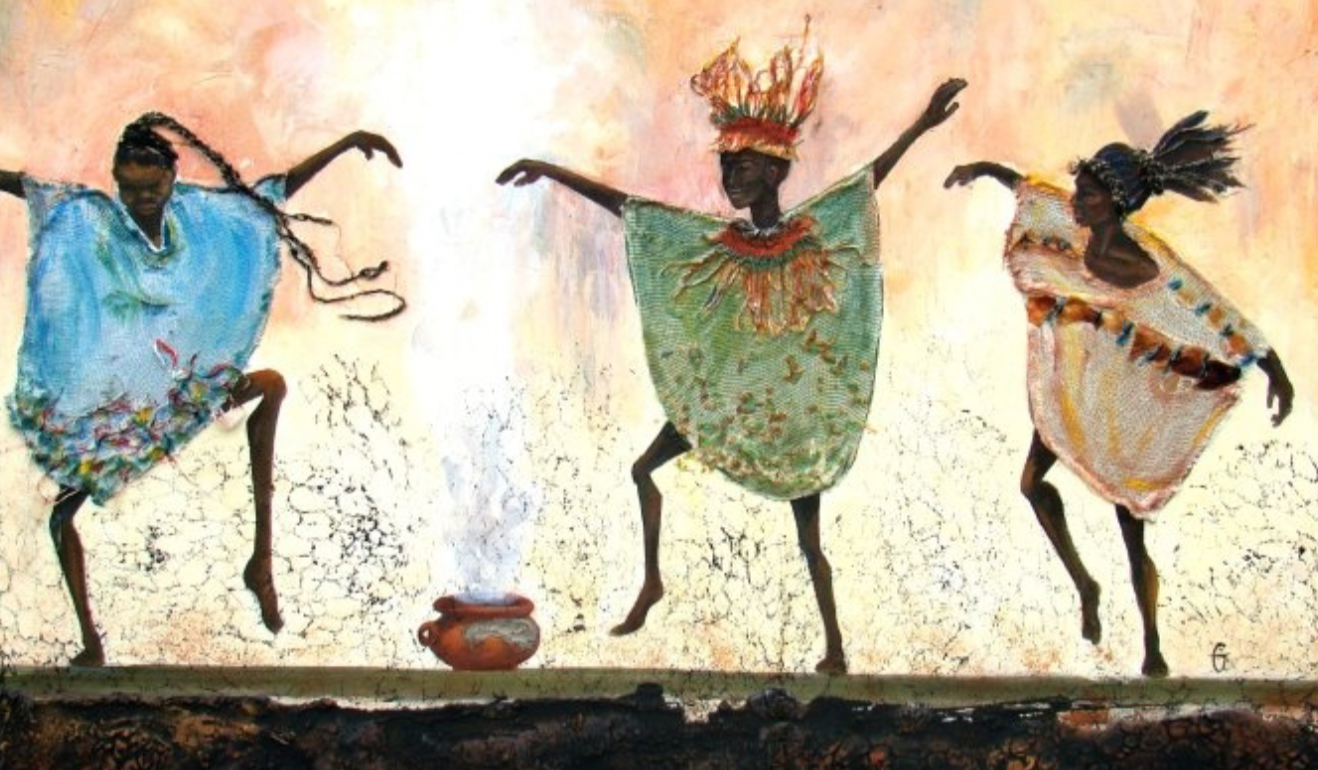
What do you know about Hoodoo?
A descendant of West African spirituality, Hoodoo is another wellspring of superstitious leanings, supporting both the foot-sweeping and palm-itching beliefs. Hoodoo combines ancestral traditions, indigenous American herbalism, and European folklore.
Along with the previously mentioned beliefs, it also adds particular practices about the disposal of hair and nail clippings, lest evil actors use the discarded pieces for malicious charms or sells, and etiquette around cemeteries. According to African American folk practice, one should hold their breath when passing by a cemetery. Breathing could allow wayward spirits to enter the body, bringing mayhem to the person’s life.
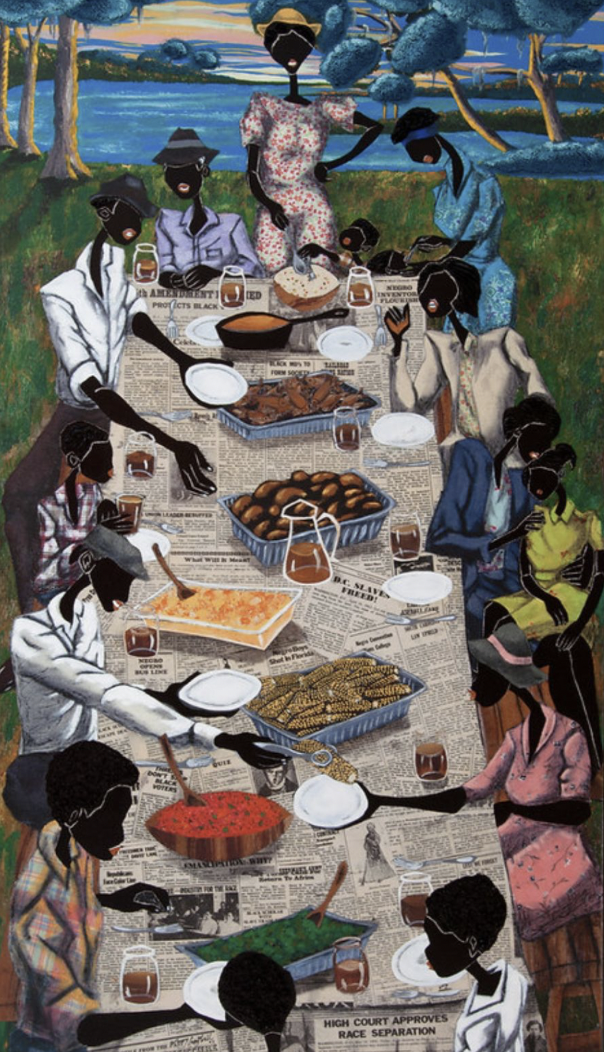
Hoodoo, and its herbalist tenets, contributes to another luck practice involving collard greens, black-eyed peas, and the New Year. Collard greens represent paper wealth, black-eyed peas represent coins and overall wealth, and eating both as a New Year’s tradition is said to bring prosperity in the coming year. The vegetables were dietary staples for slaves, who were provided little else in the way of nutrient-rich foods. It is unsurprising that struggling African American communities connected these foods and the increased health they provided with flourishing in the New Year. Generation after generation of enslaved and then freed peoples would have witnessed these trends, and so the superstitions took hold.
Where are we now?
In modern black households, these superstitions have integrated themselves into our lives, whether we are aware of them or not. Collard greens and black-eyed peas are served at gatherings. The way we talk about and behave around the dead is socially significant. And, personally, I knew not to sweep near my grandma’s feet, even if she or I didn’t know the reason behind it.
Superstitions have gone from conscious matters for warding against ill fortune to building blocks of a greater cultural identity. How life should be done, passed down from elders to young folk. Each new wave of children grows up surrounded by these beliefs. They rearrange and put their own spin on them, defining again and again what it means to be black. Though they’ve become quieter these foundational beliefs have not disappeared. They are reexpressed. Ever present in our lives. And they will always inform us of who we are.
Co-Writers & Editors
Moremi Gbayisomore & Brian King
Written and edited by the GCA team.
Stay Updated on Our Instagram



RVSP to Winter Open House